

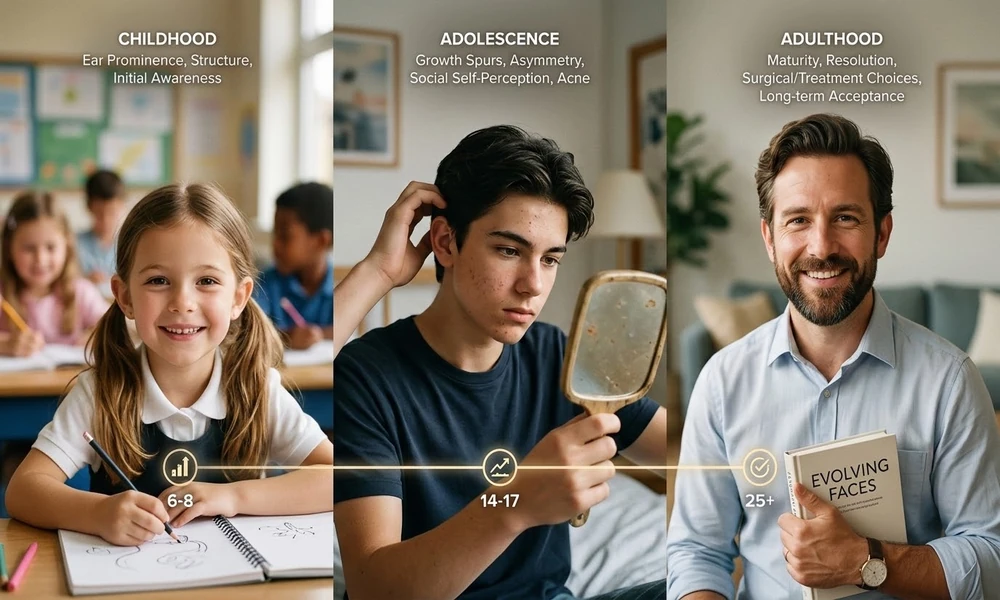
Ear and facial concerns can affect daily life in ways people can see, and in ways they often cannot. For a child, these concerns may influence speech, hearing, eating, or social comfort. For a teenager, they may affect confidence in school or social settings. For adults and older adults, they can shape communication, workplace interactions, safety, and overall quality of life.
Not every concern is cosmetic. Not every concern is urgent either. Some are tied to development, injury, infection, hearing changes, or long-term health needs. At every stage of life, the most helpful step is knowing when something is part of normal growth and when it may need medical evaluation, supportive care, or specialized treatment.
Early Childhood and the Role of Observation
During early childhood, parents and caregivers are often the first to notice changes involving the ears, face, speech, or hearing. A child may not be able to explain discomfort clearly, so the signs can be subtle. Pulling at the ear, delayed speech, trouble following simple instructions, frequent irritability, or avoiding certain sounds may all suggest that something needs a closer look.
Ear, eye, and throat concerns are especially common in young children because their immune systems are still developing. Children are also often exposed to germs in school, daycare, and shared spaces. Sometimes an ear infection or throat issue can affect sleep, appetite, behavior, or hearing for a short time.
For families dealing with these concerns, a clinic such as Carolina Urgent Care may provide pediatric care services and treatment for an eye, ear, or throat issue. Family and urgent care settings can help determine whether symptoms need medication, monitoring, or a referral to another healthcare professional.
Facial Development, Social Awareness, and Confidence
As children grow, they become more aware of their appearance and how others respond to them. Facial features, ear shape, scars, birthmarks, asymmetry, or visible differences may become more noticeable during the school years. Some children are not bothered by these differences. Others may become self-conscious, especially if classmates make comments.
A child’s confidence is closely tied to social experiences. A child who feels different may avoid group activities, photographs, sports, or classroom participation. That does not mean every visible difference needs treatment. It does mean adults should pay attention to changes in mood, behavior, and willingness to engage with others.
Supportive communication matters. Caregivers can help by using calm, factual language and avoiding negative comments about appearance. When concerns involve function, pain, injury, or emotional distress, a healthcare evaluation can clarify options and keep assumptions from guiding decisions.
School-Age Communication and Hearing Concerns
Hearing plays a major role in learning, speech development, and social connection. A school-age child with hearing difficulty may seem distracted, inattentive, or uncooperative when they are actually missing parts of conversations. They may ask people to repeat themselves, turn up the volume on devices, or struggle in noisy classrooms.
Even mild or temporary hearing problems can affect confidence. Children may hesitate to answer questions, join conversations, or participate in group work if they are unsure what was said. Over time, this can affect academic performance and peer relationships.
Teachers, caregivers, and healthcare providers all play a role in recognizing these patterns. Hearing screenings, ear exams, and follow-up evaluations can help identify whether the issue is related to wax buildup, infection, fluid, structural concerns, or another hearing-related condition.
Adolescence, Appearance, and Identity
Adolescence often brings a stronger awareness of appearance and identity. Teenagers may compare themselves to peers or to images they see online. Features such as prominent ears, facial imbalance, scars, or changes after an injury can become a source of stress, even when others view them as minor.
Some teens may explore medical or surgical options when a concern affects daily confidence or function. For example, otoplasty may be considered for prominent ears, while facial reconstruction may be part of care after trauma, congenital differences, or other medical needs. A specialist such as North Texas Facial Plastic Surgery provides services related to facial reconstruction and prominent ear correction in Dallas, which may be discussed when structural or appearance-related concerns are significant.
For teenagers, treatment decisions should include emotional readiness, realistic expectations, and family involvement. The goal is not perfection. It is to understand the concern, review safe options, and consider how any intervention may affect comfort, function, and confidence.
Young Adulthood and Healthcare Independence
Young adulthood is often the first stage when people begin making healthcare decisions on their own. They may move away from home, start working, attend college, or manage their own insurance and appointments. Ear and facial concerns may only get attention when they begin interfering with daily life.
A young adult may seek care for recurring ear infections, hearing changes, facial injuries, jaw or sinus-related discomfort, or concerns that have been present since childhood. Some may also revisit issues that were not treated earlier because they now feel more prepared to make decisions.
This stage can be challenging because young adults often delay care. They may assume symptoms will improve on their own or avoid appointments because of time, cost, or uncertainty. Clear healthcare conversations can help them understand when monitoring is enough and when an evaluation is important.
Adult Communication, Work, and Hearing Health
In adulthood, hearing and facial concerns can affect professional and social communication. Difficulty hearing in meetings, missing parts of phone calls, or struggling in restaurants can create frustration. Some adults withdraw from conversations because listening starts to feel tiring.
Hearing changes can happen gradually, which makes them easy to overlook. A person may blame background noise, mumbling, or stress before considering a hearing evaluation. Over time, untreated hearing difficulty can affect relationships, workplace confidence, and overall quality of life.
For adults who notice these changes, Apex Audiology offers hearing care and evaluations, hearing aids, and audiology services. Hearing evaluations can help determine the type and degree of hearing loss. Hearing aids or other support options may also improve everyday communication.
Midlife Health Decisions and Preventive Care
By midlife, many people become more aware of long-term health planning. Ear and facial concerns may be connected to broader medical issues, including chronic infections, skin changes, balance problems, sinus concerns, diabetes, circulation, or medication side effects. Preventive care becomes more important because small changes can sometimes point to larger health patterns.
Adults in this stage may also deal with the effects of past injuries, untreated childhood conditions, or gradual changes in hearing and appearance. A facial concern that once seemed only aesthetic may become functional if it affects breathing, vision, chewing, or comfort. Ear-related issues may also become more noticeable when work, family responsibilities, and social life require steady communication.
Regular primary care visits can help connect the dots. A provider may recommend screenings, specialist referrals, lifestyle changes, or follow-up testing based on symptoms and risk factors. Preventive healthcare is often less about reacting to one problem and more about identifying concerns before they become harder to manage.
Older Adulthood, Safety, and Quality of Life
In older adulthood, hearing and facial concerns often intersect with safety, independence, and social connection. Hearing loss can make it harder to notice alarms, follow medical instructions, understand conversations, or stay engaged in family activities. Facial changes, skin lesions, injury risk, and healing concerns may also become more relevant.
Confidence can be affected at this stage as well. Some older adults feel embarrassed about asking people to repeat themselves. Others may avoid social events because communication becomes exhausting. These changes can increase isolation, especially when hearing issues are untreated or misunderstood.
A family and primary care provider such as IMPCS provides preventive care in Sebastian, FL, along with family and preventive healthcare services. Primary care can help older adults monitor changes, manage chronic conditions, and coordinate referrals when ear, hearing, or facial concerns require specialized attention.
Emotional Support Across Every Life Stage
At any age, ear and facial concerns should be handled with sensitivity. Children, teens, adults, and older adults may all feel vulnerable when discussing appearance, hearing, or communication challenges. A concern that seems small to one person may feel significant to another.
Emotional support starts with listening. Instead of dismissing concerns, families and healthcare providers can ask how the issue affects school, work, relationships, or daily comfort. This helps separate outside pressure from genuine distress and makes it easier to choose the right next step.
Education also reduces fear. When people understand what may be causing a symptom and what options are available, they are better able to make calm, informed decisions. This is especially important when concerns involve both physical health and self-confidence.
Conclusion
Ear and facial concerns change over time because people change over time. A childhood ear infection, a teenager’s concern about appearance, an adult’s hearing difficulty, or an older adult’s need for preventive care can all affect confidence, communication, and healthcare choices in different ways.
The most helpful approach is to avoid assumptions. Not every concern is minor, and not every concern needs immediate treatment. Each stage of life calls for careful observation, honest conversation, and appropriate medical guidance when symptoms affect comfort, function, or quality of life. With the right support at the right time, people are better equipped to communicate clearly, make informed decisions, and move through life with greater confidence.