

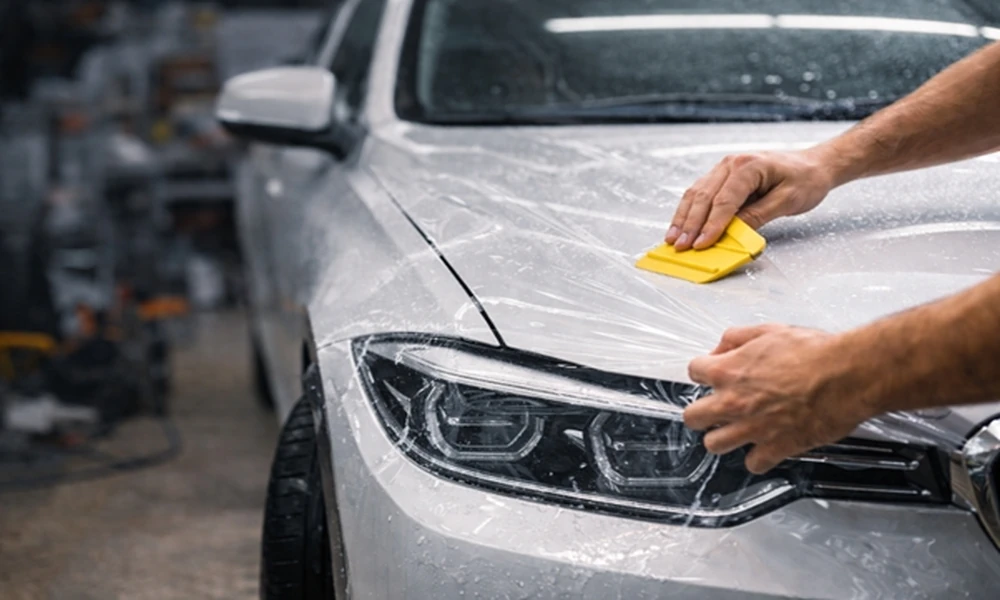
The first rock chip on a new car costs about four hundred dollars to fix properly. The second one costs you nothing but pride, because by then you have stopped caring. That is the trap. Small chips do not stay small in a place with real winters and gravel trucks, and the damage you ignore in November is the damage you pay for in April.
Paint protection film, often called clear bra, is a transparent urethane layer that goes over your existing paint. It absorbs the hits your clear coat cannot. You get to keep the factory finish instead of paying a body shop to recreate it. This piece walks through what the film actually does, where it makes sense to install it, and how to pick a shop that will not leave you with peeling edges two winters from now.
What Paint Protection Film Actually Does
Think of the film as a screen protector for your car, except the stakes are higher. A phone case protects a device you will replace in three years. Your paint is attached to a machine you plan to keep for eight or ten.
The film works on four fronts:
- Impact absorption. Road debris hits the urethane and stops there instead of reaching the clear coat and base coat underneath.
- Chemical resistance. Road salt, bug splatter, and bird droppings all contain compounds that etch bare paint over time.
- UV stability. The film blocks the ultraviolet light that fades and oxidizes exposed panels.
- Self-healing. Light swirls and scuffs in the film relax and disappear when the surface warms up in sun or with warm water.
Here is the part people miss. The film is sacrificial. It is supposed to take the abuse so your paint does not. A well installed piece of film that looks scuffed after five years has done its job, and replacing one panel of film beats repainting one panel of car every single time.
Why Winter Driving Changes the Math
I have watched a lot of cars come through northern shops, and the pattern is always the same. Cars driven only in fair weather hold their paint for a decade with nothing more than wax. Cars that see salt, sand, and freeze-thaw cycles look sandblasted on the front bumper by year four.
That is not a sales pitch, it is chemistry. The Federal Highway Administration reports that roughly seventy percent of the country’s roads sit in regions that see snow and ice, which means road salt and abrasive treatments are the norm for a huge share of American drivers. If you live in one of those regions, your front end is being blasted every single winter.
The other factor is value. Paint condition is one of the first things a buyer inspects and one of the easiest things to negotiate against. A car with chipped, hazy paint reads as neglected even when the mechanicals are perfect. Preserving the original finish is one of the few car care expenses that tends to come back to you at resale.
Where the Film Belongs on Your Car
Full vehicle coverage exists, and for a show car or a leased vehicle you plan to return, it can make sense. For most drivers, though, partial coverage delivers most of the benefit for a fraction of the cost. The question is which panels to prioritize.
Rank them by exposure:
- Front bumper and hood leading edge. This is the highest impact zone on any car. Everything you drive through hits here first.
- Headlights and fog lights. Plastic lenses pit and yellow, and replacements are not cheap.
- Mirrors and door cups. Rings scratched into the paint behind door handles are nearly impossible to polish out.
- Rocker panels and lower doors. Tires throw grit and salt sideways along the side of the car all winter long.
- Rear cargo area. Loading groceries, coolers, and dogs scratches the bumper top and rear sill more than any highway debris ever will.
If you are deciding where to start and you drive a daily commuter, I would put money into a front end kit before anything else. A rock chip in a bumper cover is the most common and least forgivable type of paint damage, and it is the one the film prevents outright.
If your car is leased, pay attention to the coverage you choose. Any protection is better than none, so a partial front end kit is a reasonable middle ground when a full wrap feels like too much commitment.
Choosing a Shop Without Getting Burned
Film quality matters, but installation quality matters more. The same roll of material looks flawless in one shop and terrible in another, and the difference shows up months later when edges start lifting.
Use this checklist before you hand over your keys:
- Ask which film brand they use. Reputable installers use established brands with published warranties and they will tell you the name without hesitating.
- Ask how the film is cut. Computer plotted kits fit most makes and models precisely, with clean edges and no blades near your paint. Hand cutting works too, but only in experienced hands.
- Look at a finished car. Any shop proud of its work will show you one. Check the edges around the hood and mirrors specifically.
- Get the warranty in writing. Film manufacturers back their product for years, and good installers pass that coverage through to you.
- Confirm they will correct defects. Ask what happens if an edge lifts in the first year. The answer tells you everything.
A quick note on self-healing film. It does not heal gouges, cuts, or damage that pushes through to the paint. It handles light scratches and swirl marks, the kind you get from washing and everyday contact. Anyone promising more than that is overselling.
Care That Keeps Film Looking New
Once the film is on, your maintenance routine actually gets easier. The surface is slicker than bare paint, so bug guts and tar release with far less scrubbing, and scrubbing is what creates swirls in the first place.
Wash by hand or use a touchless wash, and skip the stiff brush at the coin-op bay. That brush holds grit from every truck that came before you. Dry with a microfiber towel rather than a squeegee. If you park outside, expect the film to look dull in the winter months from road film. It is not damaged, it is dirty, and a proper wash brings it right back.
Paired with a ceramic coating on top, the film becomes noticeably easier to keep clean. Water beads and rolls, dirt releases faster, and the whole front end stays glossy instead of collecting a gray film all season.
Is It Worth It For You?
Run the honest math. A front end kit costs a fraction of a quality repaint, and repainting a car never restores the factory finish perfectly. Modern finishes are applied in controlled conditions that no body shop can fully replicate, and that gap shows under certain light.
If you drive a car you plan to keep, if you live anywhere with real winters, and if you log highway miles behind trucks, the answer is straightforward. Film is cheaper than a repaint, it protects the value you already paid for, and it does the job invisibly. If you drive a beater you plan to run into the ground, save your money and put it toward maintenance instead.
For drivers around southwest Michigan, one option worth a look is Car paint protection in Kalamazoo, MI, where shops work with plotted film kits and manufacturer backed warranties on a range of vehicle types. Ask what coverage they recommend for how you actually drive, not for how you imagine you drive.
Here is the question I would leave you with. When you trade your car in five years from now, would you rather explain a few rock chips and hope the buyer does not care, or hand over a car that still looks like it did the day you bought it?